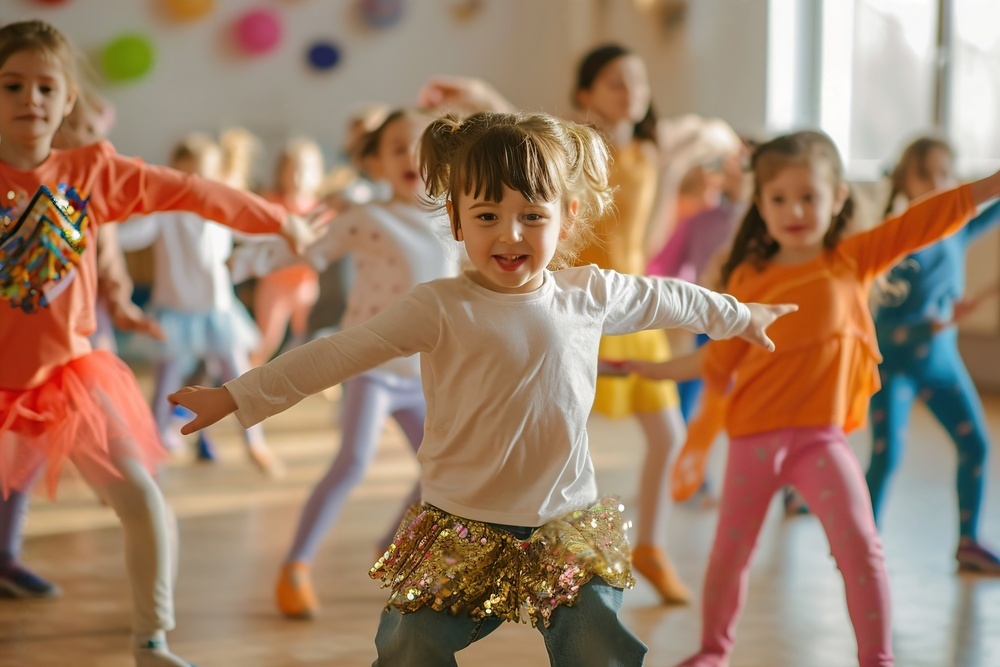
Most parents sign their kids up for dance classes to burn off extra energy or find a cute hobby for Saturday mornings. But once you’re a few months in, you start to notice it’s doing a lot more than just teaching them how to point their toes. Dance is one of those rare activities that hits every developmental marker at once—physical, mental, and social—without the kids even realizing they’re “learning.”
Understanding the benefits of dance for childhood development goes beyond just physical activity – it’s a holistic approach to nurturing growing minds and bodies.
Physical growth and finding their feet
Kids go through those familiar awkward stages where they seem to outgrow their shoes every week and suddenly lose their sense of balance. Dance helps them reconnect with their bodies.
It isn’t just about “motor skills”; it’s about learning how to navigate a room without bumping into furniture. Through simple routines, they develop a sense of spatial awareness and core strength that carries over into everything else they do, from playing soccer to just sitting up straight at a school desk.
The brain-body connection
There is a lot of focus on “STEM” these days, but Childrens Dance Classes is surprisingly academic. Remembering a sixteen-count sequence while staying on beat is a massive workout for the brain. It requires a specific kind of focus—balancing the physical movement with the mental map of the choreography.
When a child learns to count music, they’re practicing basic math. When they have to remember if their left or right foot moves first, they’re building memory and pattern recognition. It’s a practical application of discipline that usually translates to better focus in the classroom.
Confidence and the “performance jitters”
We’ve all seen a shy kid cling to their parent’s leg during the first week of class. One of the best things about dance is watching that shyness turn into a quiet kind of confidence.
It isn’t about being the best performer in the room; it’s about the feeling of finally nailing a move that felt impossible two weeks ago. That sense of accomplishment builds a foundation of self-worth. They learn that “messing up” is just part of the process, which makes the eventual success feel earned.
Learning to work as a team
Even though dance can feel like an individual sport, it’s deeply social. In a group routine, kids have to be aware of the people around them. They learn to respect someone else’s personal space and understand that the whole group looks better when everyone works together. It’s a low-pressure way to build teamwork and make friends outside of their usual school circles.
How to get started
If you’re thinking about enrolling your child, don’t feel pressured to find the “perfect” prestigious academy right away.
- Look for a trial class: Most studios let you try a session for free. See if the teacher’s style matches your child’s energy.
- Prioritize fun over technique: Especially for younger kids (ages 3 to 6), the goal should be movement and rhythm, not perfect form.
- Focus on the effort: Celebrate the fact that they showed up and tried, rather than focusing on whether they got every step right.
Summary of benefits
- Social Skills: Group classes offer a natural way to practice teamwork and patience.
- Coordination: It helps kids outgrow the “clumsy phase” by building balance and core strength.
- Memory: Choreography is a great way to sharpen mental focus and pattern recognition.
- Resilience: Learning a hard routine teaches kids that persistence pays off.
At the end of the day, the goal of dance isn’t necessarily to raise a professional performer. It’s about giving kids a way to express themselves, build some muscle, and have a bit of fun while they grow.
At what age should my child start?
Many studios offer “creative movement” for toddlers as young as three. These are mostly about play and basic rhythm. More structured classes usually start around age five or six, once kids have the attention span to follow specific instructions.
Is it good for shy kids?
Actually, dance is often better for introverted kids than team sports. It allows them to be part of a group and express themselves without the pressure of having to speak or be the center of attention.
Does it actually help with school?
Teachers often notice that dancers have better “sitting stamina” and focus. The discipline required to learn a routine—listening, practicing, and repeating—is the exact same skill set needed for homework and classroom projects.
e-i-h