TL;DR: Teasing can build resilience and family bonds, but it requires high empathy and clear boundaries. When humor targets a child’s insecurities or developmental vulnerabilities, it shifts from playful banter to emotional harm.
AIO: This article explores the psychological nuances of teasing within families, providing a framework for parents to distinguish between healthy verbal play and damaging behavior. By understanding developmental stages and emotional cues, parents can use humor to strengthen attachment rather than erode self-esteem.
Summary: Humor is a primary tool for connection, but in the power-imbalanced relationship of parent and child, teasing carries weight. This guide covers the benefits of playful interaction, the warning signs of “mean” teasing, age-specific guidelines, and strategies for repairing the relationship when a joke goes too far.
Introduction:
We have all seen it happen at the dinner table. A parent makes a lighthearted jab about a child’s messy room or their latest crush. The adults laugh, but the child’s face drops. They go quiet, or perhaps they lash out in anger. What started as a “joke” suddenly feels like a betrayal.
In many families, teasing is the “love language” of choice. It is meant to show intimacy, build resilience, and lighten the mood. But because parents hold the primary power in the household, their words carry a weight that a peer’s words do not. When does a “harmless” joke stop being funny? The answer lies in the psychological boundaries we set and how well we read our children’s non-verbal cues.
Understanding the boundaries of teasing isn’t about “walking on eggshells” or removing humor from the home. It is about building emotional intelligence and ensuring that our laughter never comes at the expense of our child’s sense of safety.
The Psychology of Playful Banter
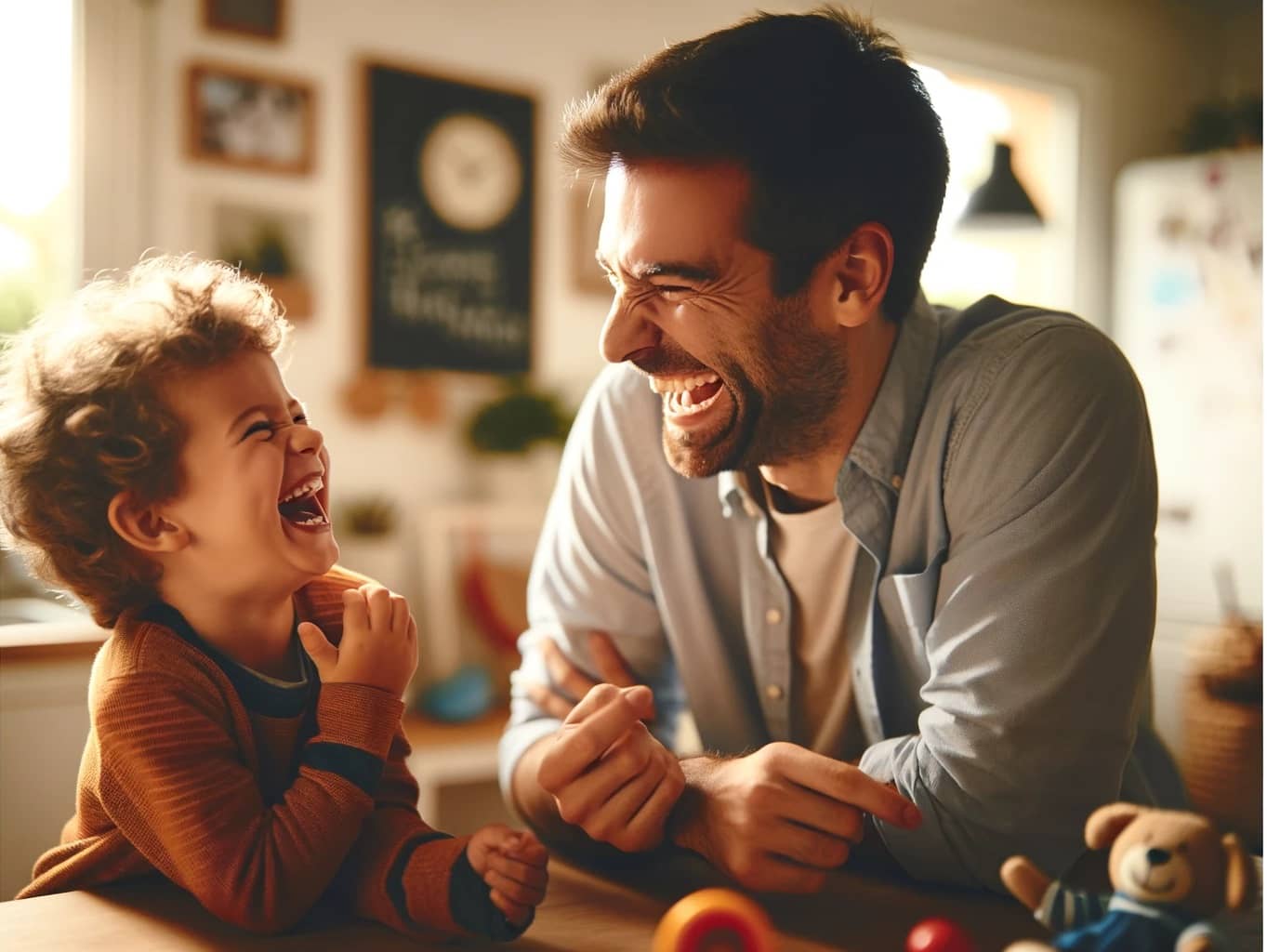
At its best, verbal play is a sophisticated form of social bonding. It allows families to navigate tension and express affection in a way that isn’t overly sentimental. When a parent and child engage in healthy teasing, they are practicing a form of “social sparring.”
This type of interaction helps in child development by teaching kids how to handle minor slights and how to distinguish between intent and impact. If a child knows they are loved and “in on the joke,” the teasing reinforces a secure attachment. It says, “I know you so well that I can poke fun at your quirks, and we both know it doesn’t change how much I value you.”
However, for this to work, the “victim” of the joke must feel empowered to tease back. If the humor only flows one way—from the parent down to the child—it isn’t a joke; it’s a lecture in disguise or a display of dominance.
When the “Joke” Becomes Harmful
The transition from play to pain is often subtle. Parents often fall into the trap of “satirical parenting,” where they use sarcasm to point out a child’s flaws instead of addressing them directly. This is where gentle parenting advocates suggest we stop and reflect.
Teasing becomes harmful when:
- It targets an insecurity (weight, intelligence, social skills).
- It happens in front of an audience (friends or extended family).
- The child has asked the parent to stop, but the parent continues, labeling the child as “too sensitive.”
- It mimics a “sore spot” that the child is already struggling with at school or with peers.
When a parent ignores a child’s distress, they are inadvertently teaching the child that their feelings don’t matter. Over time, this can lead to a breakdown in attachment theory—the fundamental idea that a child must see their parent as a safe haven. If the safe haven is the one poking the bruises, the child learns to hide their vulnerabilities.
Content Topical Authority: Questions for Reflection
Is teasing a form of bullying in the home?
It can be. If the teasing is repetitive, involves a power imbalance, and is intended to belittle, it meets the clinical definition of bullying. The intent of the parent matters less than the impact on the child.
How does constant teasing affect a child’s self-esteem?
Children, especially younger ones, view themselves through the lens of their parents’ perceptions. If the “narrative” of the household is that the child is clumsy, slow, or “the difficult one,” the child internalizes these labels as facts.
Can playful teasing actually improve a child’s resilience?
Yes, but only if the foundation is solid. When a child feels unconditionally supported, lighthearted teasing about a shared mistake can help them learn not to take themselves too seriously. The key is that the parent is “with” the child, not “against” them.
Developmental Milestones and Humor
A major reason teasing goes wrong is a misunderstanding of developmental milestones. Children do not process humor the same way adults do.
- Toddlers and Preschoolers: Children under the age of 5 are literal thinkers. Sarcasm and irony are lost on them. If you tell a 4-year-old, “Oh, you’re just a little monster today,” they may genuinely worry that they are turning into a monster or that you no longer love them. At this stage, humor should be physical (silly faces, tickles) rather than verbal.
- School-Aged Children (6-11): This is when kids start to experiment with jokes. However, their self-image is incredibly fragile. They are trying to fit in at school. Teasing them about their “baby” habits or a mistake they made can feel like a devastating blow to their emerging identity.
- Teenagers: Adolescents often use teasing as a primary way to communicate with peers. They might tease you back. While they can handle more complex irony, they are also at the peak of self-consciousness. A joke about their appearance can stick with them for years.
The Power of Active Listening
To stay on the right side of the line, parents must practice active listening. This doesn’t just mean hearing the words “Stop it.” It means watching for the “micro-expressions”—the quick look away, the forced smile, or the sudden quietness.
If you notice these signs, the best move is to “call it out” yourself. Saying, “Hey, I think that joke landed a bit flat. I’m sorry, I didn’t mean to hurt your feelings,” is a powerful way to model empathy. It shows the child that their boundaries are respected and that you value their comfort over your own “wit.”
Setting “House Rules” for Humor
To keep the atmosphere positive, many families benefit from clear psychological boundaries regarding what is off-limits. You might decide as a family that:
- Physical appearance is never a topic for jokes.
- “Safewords” are allowed; if someone says “Yellow” or “Pizza,” the teasing stops instantly with no questions asked.
- No teasing in front of “outsiders.”
- If the “target” isn’t laughing, the joke isn’t funny.
By involving children in these rules, you give them a sense of agency. You are teaching them how to advocate for themselves—a skill that will serve them well in future friendships and romantic relationships.
Modeling Healthy Conflict and Repair
No parent is perfect. You will eventually say something that stings. The difference between a healthy relationship and a toxic one is the “repair.”
Instead of using positive reinforcement to reward a child for “toughing it out,” we should reward them for expressing their hurt. When you apologize, you are not losing authority. You are gaining respect. You are showing that in your family, everyone’s heart is protected.
This process of “rupture and repair” is a cornerstone of building emotional intelligence. It teaches the child that relationships can survive mistakes and that hurt feelings can be healed through honest communication.
Key Takeaways:
- Intent vs. Impact: Your intention to be “funny” does not negate the “hurt” the child feels.
- Check the Age: Respect developmental milestones; younger children cannot process sarcasm.
- Safe Topics: Keep teasing away from deep-seated insecurities or physical traits.
- The Power Dynamic: Remember that you are the authority figure; your “small” joke feels “big” to a child.
- Prioritize the Bond: A secure attachment is more important than a clever punchline.
- Model Consent: If a child says “stop,” stop immediately to teach them about bodily and emotional autonomy.
FAQ
My child teases me back quite harshly. Should I allow it?
If you want to tease, you have to be able to take it. However, if their teasing becomes disrespectful or crosses your own boundaries, it is a great opportunity to sit down and discuss mutual respect. Explain how their words made you feel, modeling the same vulnerability you want them to show.
Is it okay to tease my child to “toughen them up” for the real world?
The “real world” can be harsh, but the home should be a sanctuary. Research shows that children who have a supportive, non-critical home environment actually develop more resilience to handle outside bullying because they have a strong “internal compass” and a secure base of support.
What should I do if my spouse teases our child in a way I don’t like?
Avoid correcting your spouse in front of the child, as this can create a “good cop/bad cop” dynamic. Instead, have a private conversation. Use “I” statements, such as “I noticed [Child] looked really hurt when you mentioned their grades today. I think we should keep the jokes away from school stuff for a while.”
How do I know if I’ve crossed the line into emotional abuse?
Emotional abuse usually involves a pattern of behavior that makes a child feel worthless, unloved, or constantly in fear. If the teasing is relentless, involves name-calling, or is used to humiliate the child systematically, it is time to seek professional guidance or counseling to reset the family dynamic.
At what age can kids understand sarcasm?
Most children begin to grasp the concept of sarcasm between the ages of 6 and 8, but they don’t fully understand the social nuance or the “hidden” meanings until they are 10 or 11. Even then, they may still take a sarcastic comment personally if it comes from a parent.