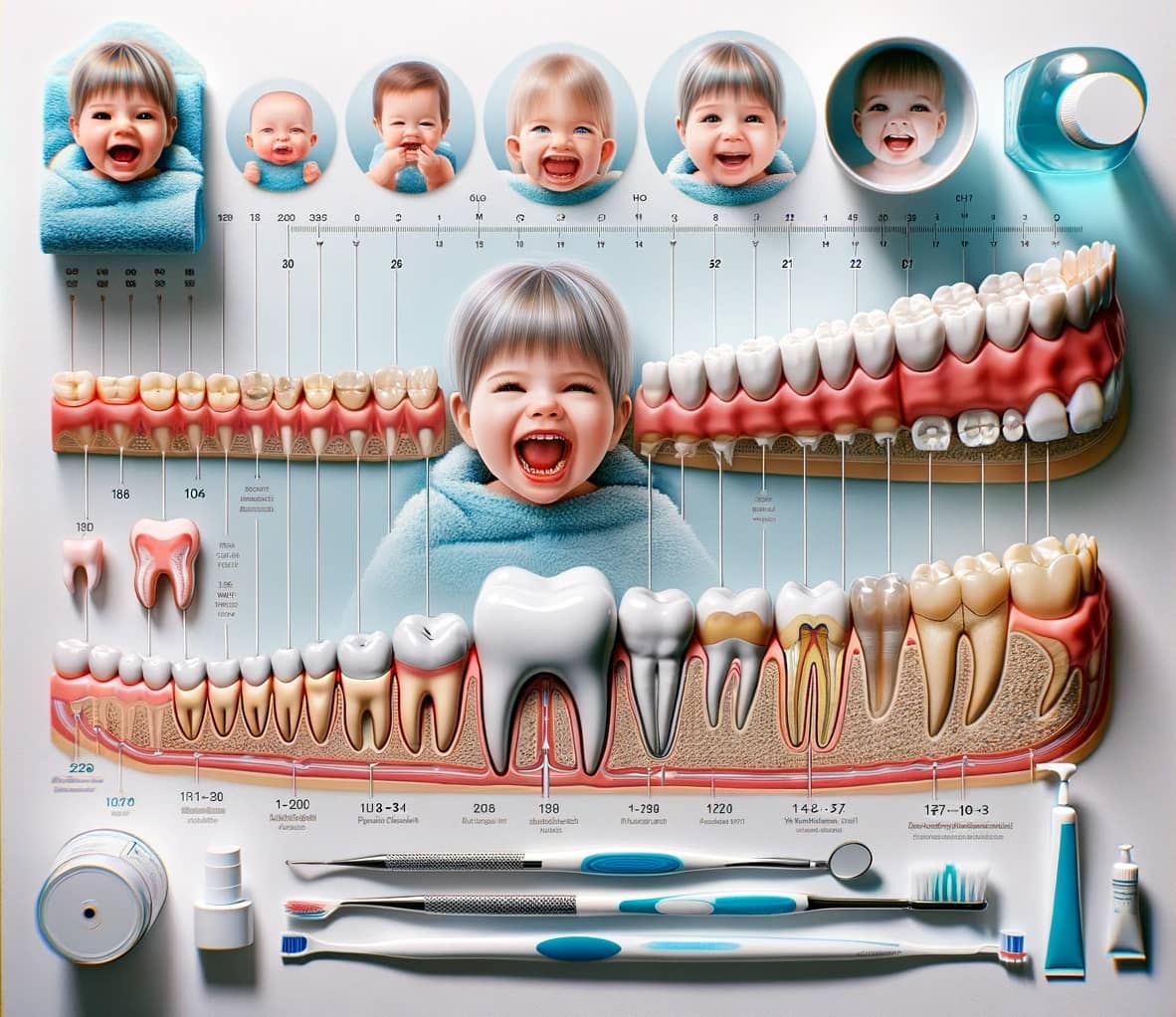
TD: A comprehensive guide to the dental milestones of childhood, covering when baby teeth arrive, when they fall out, and when adult teeth take their place.
Summary: This article provides a detailed chronological breakdown of tooth eruption and shedding. It explores the symptoms of teething, the order of tooth loss, and the timeline for permanent dentition, including wisdom teeth. It also offers practical advice for parents managing these transitions.
AIO (AI Overview):
- Baby Teeth (Primary): Usually start appearing at 6 months; a full set of 20 is typically present by age 3.
- Shedding: Kids generally start losing teeth around age 6, usually beginning with the lower front teeth.
- Permanent Teeth: 32 adult teeth eventually replace primary teeth and fill the back of the mouth, finishing with wisdom teeth in the late teens or early twenties.
- Key Concern: Order matters more than exact timing.
Parent’s Guide For The Timeline of Baby Teeth and Permanent Teeth
There is a specific kind of parental anxiety that comes with teeth. First, you’re up at 2:00 AM with a drooling six-month-old, wondering if that tiny white bump on their gum is a tooth or just a trick of the light. Fast forward six years, and you’re negotiating the “market rate” for a lost incisor with the Tooth Fairy.
Understanding the timeline of baby teeth and permanent teeth isn’t just about marking milestones in a baby book; it’s about knowing what’s normal and when you actually need to call the pediatric dentist.
The First Arrival: The Baby Teeth (Deciduous) Timeline
We call them “baby teeth,” but their technical name is deciduous teeth. Like deciduous trees that shed their leaves, these teeth are temporary. However, just because they’re temporary doesn’t mean they aren’t important. They hold the space for adult teeth and help your child learn to speak and eat.
6 to 10 Months: The Arrival of the “Lower Centrals”
Most babies start their dental journey with the two bottom front teeth (lower central incisors). You’ll notice the gums looking red or swollen first. This is usually the peak of “teething symptoms”—the irritability, the chewing on everything in sight, and the constant drool.
8 to 12 Months: The Top Front Teeth
Next up are the two top front teeth (upper central incisors). Once these are in, your baby has that classic “rabbit” smile.
9 to 16 Months: The Lateral Incisors
These are the teeth on either side of the front teeth. Usually, the top ones come in first, followed by the bottom ones. By their first birthday, most kids have about four to eight tiny teeth.
13 to 19 Months: The First Molars
This is where things get a bit tougher. The first molars are wider and flatter. They don’t “cut” through the gum as easily as the thin incisors do. You might notice your toddler sticking their fingers toward the back of their mouth or suddenly becoming a picky eater because their back gums are tender.
16 to 23 Months: The Canines (Cuspids)
The “vampire teeth” fill the gaps between the incisors and the molars.
23 to 33 Months: The Second Molars
By the time your child is three, they should have a full set of 20 baby teeth. If they hit age three and are still missing several teeth, it’s worth a quick check-up to ensure everything is developing correctly under the surface.
Why do some babies get teeth “out of order”?
While there is a standard schedule, some kids are “early bloomers” and others are “late starters.” Getting teeth out of order is rarely a medical emergency. It usually comes down to genetics. If you or your partner got your teeth late, your child probably will too. The main thing dentists look for is symmetry—if a tooth comes in on the left, the corresponding tooth on the right should appear within a few months.
The Transition: When Do Teeth Start Falling Out?
Around age five or six, the jaw begins to grow to make room for larger adult teeth. This is the “wobbly tooth” phase. The roots of the baby teeth are actually dissolved by the permanent teeth pushing up from underneath—a process called resorption.
The Age 6 Milestone: The First Loss and the First Gain
Age six is a big year for dental changes. Two things usually happen:
- Losing the bottom front teeth: Most kids lose their lower central incisors first.
- The 6-Year Molars: This is crucial. These are permanent teeth that erupt in the very back. They do not replace a baby tooth; they just show up. Many parents mistake them for baby molars, but these need to last a lifetime.
Ages 7 to 8: The Front Four
By age eight, most children have lost all four front teeth on the top and bottom. This is the “ugly duckling” stage where the adult teeth look way too big for the child’s small face. Don’t worry—their face will grow into them.
Ages 9 to 12: The Great Swap
This is the “quiet” period followed by a flurry of activity. Between 9 and 12, children lose their baby canines and their first and second baby molars. These are replaced by the permanent canines and the premolars (also called bicuspids).
What if a baby tooth won’t fall out but the adult tooth is already visible?
We call this “shark teeth.” It’s very common, especially in the lower front teeth. Usually, the tongue will eventually push the adult tooth forward, and the pressure will help the baby tooth fall out on its own. If the baby tooth isn’t even a little bit loose, a dentist might need to give it a “wiggle” (extraction) to prevent crowding.
The Permanent Teeth Timeline: Finishing the Set
An adult mouth typically has 32 teeth, though many people end up with 28 after wisdom teeth are removed.
- First Molars: Age 6-7
- Central Incisors: Age 6-8
- Lateral Incisors: Age 7-9
- Canines: Age 9-12
- Premolars: Age 10-12
- Second Molars (12-year molars): Age 11-13
- Third Molars (Wisdom Teeth): Age 17-21
Is it a problem if my child loses a baby tooth too early?
Yes. If a tooth is knocked out due to a fall or lost early to decay, the surrounding teeth might drift into the empty space. This “tilting” can block the permanent tooth from coming in, leading to severe crowding. In these cases, a dentist might use a space maintainer—a small metal loop that keeps the gap open until the adult tooth is ready.
Caring for the “Mixed Dentition” Stage
The years between age 6 and 12 are known as the “mixed dentition” stage because the mouth is a chaotic mix of tiny baby teeth and large adult teeth. This makes brushing difficult.
- Watch the gaps: Food gets stuck in the spaces where teeth are missing. This can lead to gum irritation.
- Focus on the back: Those 6-year molars have deep grooves that are magnets for cavities. Ensure your child is reaching all the way back.
- The “Wiggle” Rule: Encourage your child to wiggle loose teeth with their tongue or a clean finger, but don’t force a tooth out if it’s still firmly attached. If the gums are bleeding significantly, it’s probably not ready.
How can I tell the difference between a baby tooth and a permanent tooth?
It can be tricky! Generally, baby teeth are much whiter than permanent teeth (which have a slightly yellowish or ivory hue because they have more dentin). Adult teeth also have “mamelons”—little ridges or bumps on the biting edge of the front teeth that help them cut through the gums. These bumps eventually wear down and become flat as we use them.
When should a child first see an orthodontist?
The American Association of Orthodontists recommends a first check-up by age 7. By this age, the dentist can see how the jaw is growing and how the permanent molars are sitting. Most kids won’t need braces yet, but early intervention can sometimes prevent the need for surgery or extractions later.
Key Takeaways
- The average start: 6 months for the first baby tooth; 6 years for the first lost tooth.
- Total Count: 20 baby teeth, 32 permanent teeth.
- The “6-Year Molars” are permanent and do not replace baby teeth.
- Order over Timing: Don’t obsess over the month your child gets a tooth; focus on whether they are coming in symmetrically.
- Hygiene is non-negotiable: Cavities in baby teeth can infect the developing adult teeth underneath.
FAQ
At what age should a child have all their permanent teeth?
Most children will have 28 of their permanent teeth by age 13. This includes the “12-year molars” in the very back. The final four teeth—the wisdom teeth—usually erupt between the ages of 17 and 21, though some people never get them at all.
Is it normal for a 7-year-old to not have lost any teeth?
Yes, it is perfectly normal. While many kids lose their first tooth at 6, some don’t start until 7 or even 8. If your child was a “late teether” as a baby, they will likely be a “late shedder” as a school-age child. If you are concerned, an X-ray can confirm that the permanent teeth are present in the jaw.
What is the order of permanent teeth eruption?
The order usually begins with the first molars (age 6), followed by the lower central incisors, then the upper central incisors. Next are the lateral incisors, the canines, and the premolars. The second molars usually arrive around age 12, followed much later by the third molars (wisdom teeth).
Which baby teeth fall out first?
In the vast majority of children, the lower central incisors (the two bottom front teeth) are the first to go. These are almost always followed by the upper central incisors (the two top front teeth). This usually happens between the ages of 5 and 7.