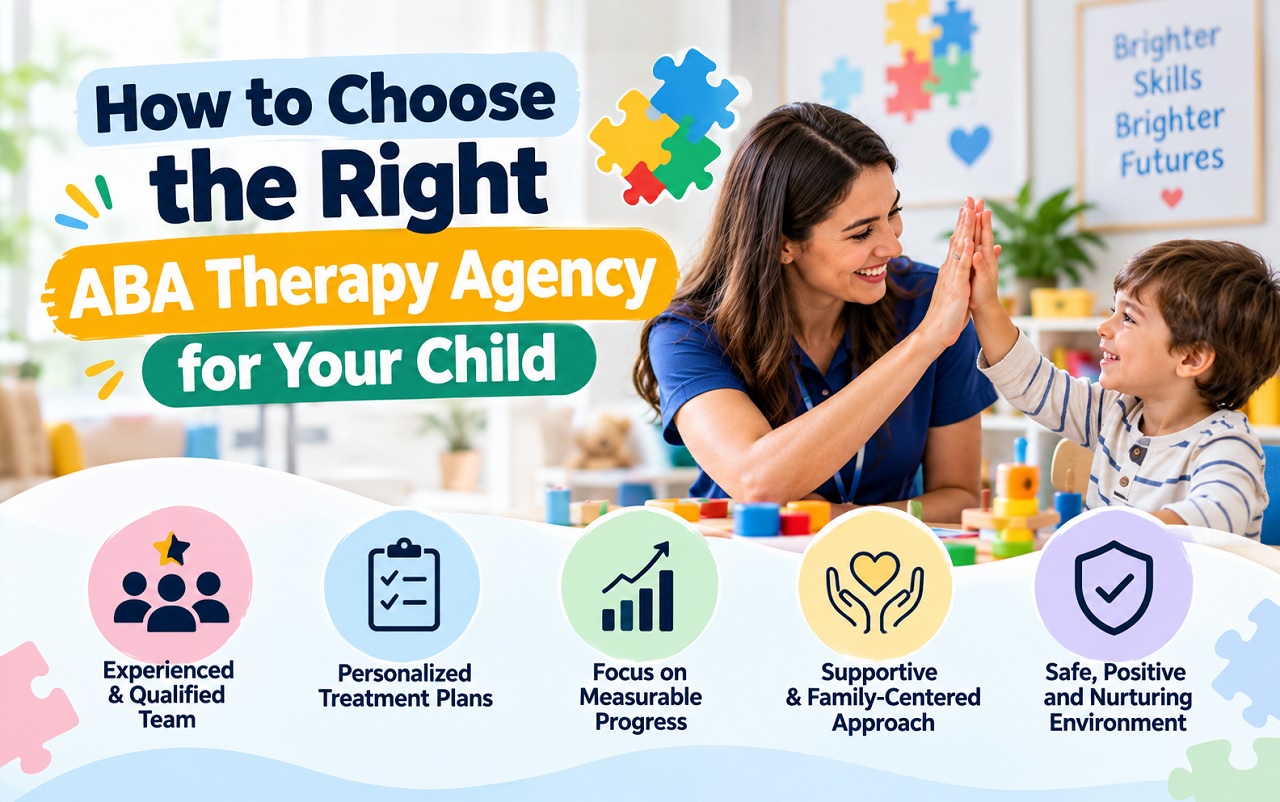
Learn how to choose an ABA therapy agency in Georgia, from BCBA credentials and insurance to service settings, parent training and red flags to avoid.
TL;DR Choosing an ABA therapy agency in Georgia comes down to five checks: who supervises the care, how the team builds goals, how much parents are trained, what your insurance pays, and how quickly therapy can start. A Board Certified Behavior Analyst should lead every case, and Registered Behavior Technicians should work under regular supervision. Look for individualized plans, assent-based teaching, written progress data and clear communication. Compare service settings, including home, center, school, community and virtual care, because the right fit depends on your child’s age, needs and routine. In Georgia, Ava’s Law lets state-regulated plans cap ABA benefits at $35,000 a year for people age 20 and under, while Medicaid and other programs offer extra routes. Early evaluation and a fast start both help. Ask hard questions before you enroll, watch for red flags, and trust agencies that explain their methods plainly.
Your child has a diagnosis, or maybe a strong suspicion, and now every search result looks the same. Each ABA therapy agency promises compassion, results and quick starts. Yet the gap between a thoughtful program and a weak one can shape months of your child’s progress and your family’s stress. This guide explains how applied behavior analysis is delivered in Georgia, which credentials matter, and how to compare an ABA therapy agency with confidence. You will also see what insurance may cover and which questions reveal quality fast, so your search for autism support ends with a clear choice.
Quick Answer An ABA therapy agency is a company that delivers applied behavior analysis through a team led by a Board Certified Behavior Analyst. To choose one in Georgia, verify credentials, review the assessment and treatment plan process, confirm insurance acceptance, ask about parent training and supervision, and compare home, center, school and virtual options against your child’s needs.
What Is an ABA Therapy Agency?
An ABA therapy agency is an organization that provides applied behavior analysis services to children and teens, most often those with autism spectrum disorder. It employs Board Certified Behavior Analysts (BCBAs) who assess each child and write the treatment plan. It also employs Registered Behavior Technicians (RBTs) who deliver daily sessions, handle billing and insurance authorizations, and coordinate care with families, schools and other providers.
Why the Choice of ABA Therapy Agency Matters
Autism is common, and families are searching for support earlier than ever. The Centers for Disease Control and Prevention (CDC) reported that about 1 in 31 eight-year-old children were identified with autism spectrum disorder in 2022. That estimate came from 16 monitoring sites, and Georgia was one of them. The same report found that children with a documented diagnosis were first diagnosed at around 47 months, just under four years old. Many parents reach the search for therapy after a long wait for answers, and they want to start quickly.
That urgency is exactly why the choice matters. Applied behavior analysis is the science of how behavior is shaped by the environment. In practice, therapists break a skill into small, teachable steps and reinforce progress. Skills might include requesting a snack, tolerating a haircut, taking turns or crossing a parking lot safely. The agency decides how well that science is applied. It sets who writes the plan, how many hours your child receives, how consistent the staff is, and whether you are treated as a partner or a spectator.
Key point: The agency, not the label “ABA,” determines the quality of care. Two providers can use the same science and deliver very different experiences.
How an ABA Therapy Agency Works From Intake to Discharge
Knowing the normal process helps you spot a shortcut. Most reputable agencies follow the same arc, even when the details differ.
Intake and Assessment
Intake begins with paperwork, a diagnostic report and an insurance check. A BCBA then observes your child, interviews you and uses structured tools to measure communication, play, daily living and behavior. Many agencies also gather input from teachers, speech-language pathologists and occupational therapists. This step should feel like a conversation about your child, not a form.
Treatment Plan and Goals
The assessment becomes a written treatment plan with measurable goals, a recommended number of hours and a plan for reducing barriers such as aggression or elopement. A strong plan names your family’s priorities. If you want your child to ride in the car without distress, that goal belongs on the page. When behavior is a concern, the plan may include a behavior intervention plan that explains what the team will do before, during and after an incident.
Daily Delivery and Supervision
RBTs run most sessions. They collect data on every goal, and the BCBA reviews it, adjusts programs and models techniques. The Behavior Analyst Certification Board (BACB) requires ongoing supervision of RBTs, so ask how many hours of BCBA contact your child’s team gets. Supervision should be visible in your child’s care, not just promised on a brochure.
Who Does What on the Team
| Role | Main job | Contact with your child |
|---|---|---|
| BCBA | Assesses, writes the plan, supervises, trains you | Periodic sessions, observation |
| RBT | Runs sessions, records data, practices skills | Most direct therapy hours |
| Clinical director | Oversees quality, caseloads and compliance | Limited direct contact |
| Parent or caregiver | Practices skills at home, shares daily context | Every day, in every setting |
Types of ABA Services an Agency Can Offer
Many Georgia agencies offer more than one setting. Where therapy happens affects which skills your child can practice and how much your household has to rearrange. Your child’s age, safety needs and routines should drive the choice, not the agency’s convenience.
| Setting | Best for | Main benefit | Main limit |
|---|---|---|---|
| In-home | Young children, daily routines, family coaching | Skills practiced where they are used | Needs space and a stable schedule |
| Center-based | Peer play, structured learning, intensive hours | Social practice and shared resources | Travel time and transitions |
| School-based | Classroom behavior, transitions, group learning | Support in the real classroom | Depends on school approval |
| Community-based | Stores, parks, restaurants, safety skills | Real-world generalization | Less control over the environment |
| Virtual | Parent coaching, rural families, follow-ups | Access when no provider is nearby | Less hands-on support for young children |
Georgia is large, and a family in Peachtree City has very different options from a family in rural south Georgia. Telehealth can extend access for parent training and consultation, but it rarely replaces hands-on therapy for a young child with intensive needs.
Key point: Match the setting to your child’s goals. A child working on classroom behavior benefits from school-based support, while a toddler learning to communicate often does well at home.
ABA Therapy Agency vs Private Practice vs Solo Provider
Families often ask whether an agency is better than a small private practice or an independent BCBA. The honest answer is that each model has strengths and trade-offs.
| Option | Pros | Cons |
|---|---|---|
| ABA therapy agency | Larger team, backup staff, insurance expertise | Staff turnover and caseload pressure can vary |
| Small private practice | Personal attention, close clinical oversight | Fewer hours or openings, limited coverage for absences |
| Independent BCBA | Flexible, often consultative, highly individualized | Hard to staff full-time therapy and manage billing |
An agency usually wins on capacity and administrative support. A smaller provider may win on personal attention. Whichever you choose, the same quality markers apply: credentialed leadership, individualized goals and transparent data.
How to Evaluate an ABA Therapy Agency in Georgia
Credentials and Supervision
Ask for the name of the BCBA who will lead your child’s case and confirm the certification in the BACB’s public registry. Ask how often the BCBA observes sessions and how RBTs are trained and supervised. Look for agencies that also follow guidance from the Council of Autism Service Providers (CASP), which publishes practice guidelines for ABA. Some agencies also pursue third-party quality accreditation, which is a useful extra signal, though not a guarantee.
Treatment Philosophy and Assent
Modern ABA has changed. Critics have raised real concerns about older, compliance-heavy approaches, and many agencies now emphasize assent, meaning the child’s willingness to take part, plus play-based teaching and respect for the child’s preferences. Ask how the team handles a child who says no, how it treats distress, and whether it teaches skills that make life better for your child rather than only reducing behaviors others find inconvenient. A thoughtful answer is a good sign. A defensive one is not.
Parent Training
Therapy hours end, but daily life does not. Good agencies teach parents the same techniques the team uses, often through a method called behavioral skills training, which combines instruction, modeling, rehearsal and feedback. Ask how often you meet with the BCBA and whether parent training is built into the plan. Progress holds up far better when the whole family can use the strategies.
Staffing and Turnover
Consistency matters to children who rely on routine. Ask how long RBTs typically stay, how new staff are introduced to your child, and what happens when a therapist is absent. Frequent staff changes can slow progress and unsettle a child.
Waitlists and Start Times
Waitlists vary widely. Ask for a realistic start date, how many hours you would receive at first, and whether the agency offers interim parent coaching while you wait. Be cautious about any program that promises immediate full-time hours without an assessment.
Insurance and Cost for ABA Therapy in Georgia
Cost is often the deciding factor, so it deserves a close look. Coverage depends on your plan type, your child’s age and your diagnosis paperwork.
What Ava’s Law Covers
Georgia passed Ava’s Law in 2015 and expanded it through a later amendment. Under the amended law, state-regulated health plans must cover autism diagnosis and treatment, including applied behavior analysis, for individuals age 20 and under. The plan may limit ABA coverage to $35,000 per year. Many self-funded employer plans fall outside state insurance mandates, though federal mental health parity rules may still affect them. Ask your insurer or HR department whether your plan is state-regulated or self-funded.
Medicaid, PeachCare and Other Routes
Georgia Medicaid covers ABA for eligible children, usually through a care management organization, and prior authorization is typically required. PeachCare for Kids, the Katie Beckett waiver and TRICARE for military families may also apply. For children from birth to three, Georgia’s Babies Can’t Wait program offers early intervention services, and school districts take over responsibility from the third birthday.
How Much Does ABA Therapy Cost Without Insurance?
Costs vary by hours, setting and provider, so ask any agency for a written estimate before you enroll. Even with coverage, you may owe deductibles, copays or coinsurance, so request a benefits check and a clear explanation of what you will pay.
Key point: Insurance rules change, and plan details differ. Confirm coverage in writing with both your insurer and the agency before therapy starts.
Questions to Ask an ABA Therapy Agency Before You Enroll
Bring this list to every tour or intake call. The way an agency answers tells you as much as the answers themselves.
- Who is the BCBA on my child’s case, and how often will they see my child?
- How do you measure progress, and how often will I see the data?
- How do you involve parents and caregivers in the plan?
- What does assent mean in your program, and how do you respond when a child says no?
- How do you handle challenging behavior, and do you use restraint or seclusion?
- Which insurance plans do you accept, and who handles authorizations?
- What is your staff turnover, and what happens when a therapist leaves?
- How do you coordinate with my child’s school, speech therapist and pediatrician?
- What is the realistic start date and weekly schedule?
- How do we know when therapy is working, and when would you recommend reducing hours?
Red Flags to Watch For
Some warning signs show up early. If you see several, keep looking.
- The agency promises a cure or guaranteed outcomes.
- You cannot meet or name the supervising BCBA.
- The plan looks identical to one written for another child.
- Parents are discouraged from observing sessions or asking questions.
- Data is never shared, or goals are vague.
- Staff cannot explain their methods in plain language.
- The program ignores your child’s comfort, communication or distress.
Which Setting Fits Which Child?
Use this decision guide as a starting point, then confirm it with a BCBA after an assessment.
| If your child… | Consider | Why |
|---|---|---|
| Is under three and building first words | In-home or early intervention | Family routines drive early learning |
| Needs peer play and group routines | Center-based | Structured chances to practice with peers |
| Struggles in the classroom | School-based | Support in the setting where problems occur |
| Has safety concerns outside the home | Community-based | Practice in real environments |
| Lives far from a provider | Virtual plus local support | Extends access and parent coaching |
How to Start: A Step-by-Step Plan
- Gather your diagnosis. Most insurers need a formal autism diagnosis from a qualified clinician. If you do not have one, ask your pediatrician about evaluation. The American Academy of Pediatrics recommends autism screening at 18 and 24 months.
- Check your benefits. Call your insurer, ask whether your plan is state-regulated, and request details on ABA coverage, authorization and costs.
- Shortlist two or three agencies. Compare credentials, settings, waitlists and philosophy.
- Tour or interview each one. Use the question list above and note how comfortable you feel.
- Review the assessment and plan. Read the goals closely and ask for changes that reflect your priorities.
- Track progress. Review data every month, attend parent training and speak up when something feels off.
What Parents and Professionals Say About ABA Therapy Agencies
What Most People Misunderstand
Many parents assume every ABA program is the same, and that more hours always mean better results. In practice, plans differ widely, and the right intensity depends on your child’s needs, age and tolerance. Another common belief is that ABA only targets behavior. Good programs also teach communication, independence and emotional skills. Families also tend to underestimate how much their own involvement matters.
Common Mistakes
Parents often choose the first agency with an opening, skip checking credentials, or sign up without reading the treatment plan. Others never ask how supervision works or how progress is measured. Some wait too long to speak up when a therapist is a poor fit. Online discussions return to the same advice: ask early, ask often, and do not feel guilty about switching providers.
What Experienced Users and Professionals Recommend
Experienced parents and clinicians suggest meeting the actual team, not only the intake coordinator. They recommend watching a session when allowed, asking for sample goals, and insisting on clear data. Professionals also advise choosing teams that respect a child’s comfort and communication. If your child seems consistently distressed, treat that as information, not something to push through.
What is the difference between ABA therapy and an ABA therapy agency?
ABA therapy is the treatment itself, based on applied behavior analysis. An ABA therapy agency is the organization that employs the clinicians, schedules sessions, bills insurance and manages quality.
How many hours of ABA therapy does a child need?
There is no single number. A BCBA recommends hours after an assessment, based on your child’s goals, age, skills and stamina. Plans can change as your child grows.
Do you need a diagnosis to start ABA therapy?
Most insurers require a formal autism diagnosis before they authorize ABA. Some agencies can help you find an evaluator, and early intervention programs may offer support before a diagnosis.
Can ABA therapy happen at home in Georgia?
Yes. Many Georgia agencies provide in-home therapy, and some also offer center, school, community and virtual options. Availability depends on your location and the agency’s staffing.
How do I know if an ABA therapy agency is good?
Look for a named BCBA, regular supervision, individualized goals, shared data, parent training and respectful treatment of your child. Clear answers to hard questions are a strong sign.
Does insurance cover ABA therapy in Georgia?
Often, yes. Ava’s Law requires state-regulated health plans to cover autism diagnosis and treatment, including applied behavior analysis, for people age 20 and under, and a plan may cap ABA benefits at $35,000 per year. Self-funded employer plans may follow different rules, so ask whether your plan is state-regulated. Georgia Medicaid and PeachCare for Kids also cover ABA for eligible children, usually with prior authorization. TRICARE covers many military families. Because plan details differ, ask both your insurer and the agency to confirm your benefits in writing before therapy begins. Request the exact deductible, copay, authorization process and any limits that apply to your child.
How do I choose between in-home and center-based ABA?
Start with your child’s goals. In-home therapy works well for young children, family routines and parent coaching because skills are practiced where they are used. Center-based therapy offers peer play, structured learning and shared resources, which helps children who need social practice. Think about practical factors too: space at home, your schedule, travel time and how your child handles transitions. Many agencies offer both, and some families blend settings as needs change. Ask the BCBA to explain which setting supports each goal in the plan, and plan to review the choice every few months.
What should an ABA treatment plan include?
A solid treatment plan names measurable goals in communication, daily living, social skills and behavior, based on a current assessment. It states recommended weekly hours, how progress will be measured, and how often the BCBA will observe and meet with you. It should include a behavior intervention plan when challenging behavior is present, parent training goals, and a plan for coordinating with your child’s school and other providers. It should also describe how the team respects your child’s assent. If the plan feels generic or you cannot understand it, ask the BCBA to rewrite it in plain language.
How long does ABA therapy last?
Duration depends on your child’s needs and progress. Some children receive intensive therapy for a year or two, while others benefit from focused support for shorter periods or step down to lower hours as skills grow. A good agency reviews goals regularly, shares data and discusses when hours can decrease. Ask how the agency decides on discharge or reduced hours. Therapy should aim to build skills that last, so your child can take part in school, family and community life with less support over time.
Can parents observe or take part in ABA sessions?
Yes, and good agencies encourage it. Parent participation helps you learn strategies, see how your child responds and spot problems early. Some programs offer live observation, recorded sessions or scheduled coaching with the BCBA. Be cautious about any provider that discourages observation without a clear reason, such as a temporary clinical need. Ask about the agency’s observation policy before you enroll, and how it protects the privacy of other children in group settings.
Finding the right ABA therapy agency takes patience, but a clear process makes it manageable. Start with credentials and supervision, then look closely at how the team builds goals, respects your child and trains your family. Confirm insurance in writing, compare settings, and use the questions above to test each provider. Trust your observations. A good agency welcomes scrutiny, explains its work in plain words and keeps your child at the center of every decision. Choose the team that earns your confidence, and revisit the decision as your child grows.
Key Takeaways
- An ABA therapy agency delivers applied behavior analysis through BCBAs who plan care and RBTs who run sessions.
- Verify the BCBA’s credentials and ask how often they supervise and observe.
- Compare home, center, school, community and virtual settings against your child’s goals.
- Ava’s Law lets state-regulated Georgia plans cap ABA coverage at $35,000 per year for people age 20 and under.
- Georgia Medicaid, PeachCare for Kids, TRICARE and early intervention programs offer other routes.
- Parent training and clear data are signs of a strong program.
- Watch for red flags such as guaranteed outcomes, vague plans and hidden supervisors.
- Ask direct questions, read the treatment plan, and review progress regularly.