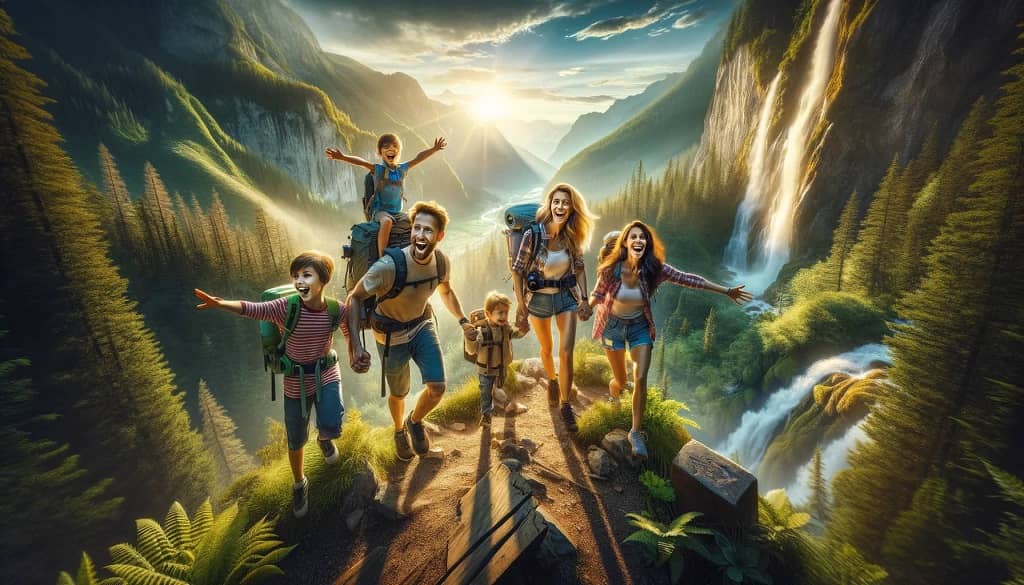
TL;DR: Building a love for the outdoors isn’t about epic mountain expeditions; it’s about frequent, low-pressure exposure. Start in the backyard, embrace the mess, let kids take measured risks, and focus on the journey rather than the destination.
AIO: This guide provides actionable strategies for parents to transition their children from screens to streams. By focusing on sensory play, age-appropriate gear, and the “gamification” of nature, you can foster a lifelong connection to the environment.
Summary: We explore how to normalize outdoor time, handle the inevitable complaints, and use tools like geocaching and nature journaling to keep things interesting. The goal is to move away from “curated” experiences and toward genuine, dirt-under-the-fingernails exploration.
Introduction:
I remember the first time I tried to take my daughter on a “real” hike. I had the Patagonia layers ready, a high-tech carrier, and a mental map of a scenic overlook that I was sure would change her life. We made it about 400 yards before she decided a particularly shiny pebble was more interesting than the panoramic views. I spent forty minutes staring at a rock while my “adventure” goals evaporated.
That was my first lesson in outdoor parenting: the outdoors belongs to the kids, not your itinerary.
We live in a world that is increasingly paved, polished, and digitized. Getting kids outside isn’t just about fresh air or burning off energy—though those are great perks. It’s about helping them realize they are part of a larger, living system. It’s about building resilience when they slip in the mud and curiosity when they find a beetle. This article isn’t a checklist for becoming a professional mountaineer family. It’s a collection of ways to make the woods, the park, and even the backyard feel like home for your children.
The Backyard is the Best Training Ground
You don’t need to drive three hours to a national parks entrance to start an adventure. In fact, for a toddler or a young child, the gap between the back porch and the fence line is an entire continent.
One of the most effective ways to encourage nature play is to create a “yes” space outside. We often spend our time outdoors telling kids what not to do: “Don’t touch that,” “Don’t get your shoes wet,” “Stay off the dirt.” If you want them to love the wild, you have to let them be a little wild.
Try setting up a mud kitchen. It sounds fancy, but it’s really just some old pots, pans, and a pile of dirt and water. This type of sensory play is foundational. When kids mix “soup” out of pine needles and rainwater, they aren’t just making a mess; they are learning about textures, gravity, and biology. They are becoming comfortable with the elements.
Focus on “Loose Parts”
In the world of early childhood education, there’s a concept called loose parts play. This means giving kids objects that don’t have a single “right” way to be used. A plastic slide is a slide. But a pile of sticks, some flat rocks, and a handful of acorns? Those can be a fort, a fairy house, a bridge, or a prehistoric dinosaur nest.
When you encourage backyard exploration, leave the bright plastic toys inside. Let the “loose parts” of nature do the heavy lifting. This builds creative muscles that a tablet simply cannot reach.
Embracing Measured Risk
We have a tendency to “helicopter” when we get into the woods. We see a fallen log and our first instinct is to grab their hand so they don’t fall. But risk-taking is a vital part of childhood development.
I’m not suggesting you let your five-year-old scale a cliff. However, letting them balance on that log—and maybe even falling off into the leaves—teaches them how to navigate their own bodies. They learn where their center of gravity is. They learn that a scraped knee isn’t the end of the world. This builds the confidence they’ll need for bigger adventures later, like bushcraft or rock climbing.
The Art of the “Boring” Hike
If you call it a “hike,” some kids will immediately groan. It sounds like work. It sounds like walking for the sake of walking, which, to a child, is incredibly boring.
Instead, call it a “scavenger hunt” or a “creek stomp.” When you go on family hiking trips, the goal should never be the summit. The goal is the caterpillar you find at the trailhead.
I’ve found that the best way to keep kids moving is to give them a job. Are they the “trail leader” (responsible for spotting the blue markers on the trees)? Are they the “chief photographer” (letting them use an old digital camera to take pictures of whatever they find)? When they have a role, they aren’t just walking; they’re on a mission.
Gamifying the Great Outdoors
If your kids are older and the lure of the screen is strong, you might need to use technology to beat technology.
Geocaching is a fantastic bridge. It uses GPS on a smartphone to find hidden containers left by other explorers. It’s a real-world treasure hunt that turns a standard walk in the woods into a high-stakes search.
Another great tool is wildlife spotting apps like iNaturalist or Seek. These allow kids to take a photo of a plant or bug and get an instant identification. It turns the forest into a living library. For the more tactile kids, nature journaling is a classic. A simple notebook and some colored pencils can turn a rest break into an art session. Watching a child try to draw the specific curve of a bird’s beak forces them to look closer than they ever have before.
Gear: What Actually Matters?
You don’t need to spend a fortune on outdoor gear, but bad gear can ruin a trip. A kid who is cold or has blisters will hate the outdoors for a long time.
- Footwear: This is the one place to spend a little money. Good traction prevents slips, and waterproof shoes keep the “I’m wet” complaints at bay.
- Layers: Teach them about the “onion” method. Base layers for sweat, fleece for warmth, and a shell for wind/rain.
- The “Special” Pack: Give your child their own small backpack. Let them carry their own water, a whistle, and—most importantly—their own snacks.
Snacks are the Secret Weapon
Never underestimate the power of a “trail bribe.” In our house, we have specific snacks—like gummy bears or a particular trail mix—that we only eat when we are out on an adventure. When the energy dips and the “how much further?” questions start, a well-timed snack can buy you another two miles of cooperation. It associates the outdoors with high-value rewards.
Teaching Stewardship and Leave No Trace
As kids grow to love the outdoors, they need to learn how to protect it. This doesn’t have to be a boring lecture. It starts with small habits.
Explain the concept of Leave No Trace by telling them we want the woods to look like we were never there, so the animals don’t get scared and the next kids get to have the same “discovery” feeling we did. Make it a game to see who can find the most “micro-trash” (those tiny bits of plastic or wrappers) to pack out.
When you transition to overnight trips, campfire safety is the next big milestone. Teaching a child how to respect fire—how to build it, how to feed it, and how to properly extinguish it—is a rite of passage. It gives them a sense of responsibility and maturity.
Why Does This Matter?
Beyond the “fun” of it, getting kids outside has measurable benefits. The boost in Vitamin D is great for their bones and immune systems. Reaching physical milestones—like climbing a certain hill or paddling a kayak—builds a different kind of self-esteem than getting a high score in a game.
We are also seeing the rise of forest schools, where the entire curriculum is based outside. Why? Because kids who spend time in nature have lower stress levels and better focus. But you don’t need a specialized school to get these results. You just need a pair of boots and a willing spirit.
Dealing with the “I’m Tired” Meltdown
It will happen. You will be two miles from the car, and your child will stage a sit-down strike.
When this happens, don’t get angry. I’ve found that the “distract and redirect” method works best. Start a game of “Would You Rather.” Tell a story about your own childhood. Or, if all else fails, do the “100 steps” game where you count out 100 steps, take a tiny break, and do it again.
Adventure isn’t about everything going right. It’s about how you handle it when things go wrong. If you can stay calm and find the humor in a sudden rainstorm or a wrong turn, your kids will learn to do the same.
Content Topical Authority: Questions for Parents
- How do I keep my child safe from ticks and insects without using harsh chemicals?
Focus on physical barriers like long socks tucked into pants and light-colored clothing to make spotting ticks easier. Many parents find success with oil of lemon eucalyptus as a more natural repellent. - What is the best age to start taking kids camping?
There is no “perfect” age. Some parents start at three months, others wait until four years. The key is “backyard camping” first to test the gear and the sleeping arrangements in a low-stakes environment. - How can I encourage outdoor play if I live in a city?
Urban adventure is just as valid. Look for local “pocket parks,” community gardens, or even just explore the weeds growing in the cracks of the sidewalk with a magnifying glass.
Key Takeaways:
- Lower the stakes: A walk around the block is an adventure if you treat it like one.
- Let them lead: Stop for the bugs, the rocks, and the puddles. The destination is secondary.
- Focus on comfort: Good shoes and plenty of snacks prevent most meltdowns.
- Normalize dirt: Mud is a sign of a day well-spent, not a problem to be solved.
- Use tech wisely: Apps like Geocaching can bridge the gap for kids who are attached to their screens.
FAQ:
How do I get my child interested in hiking?
Don’t call it hiking. Make it a scavenger hunt, bring a friend along (peers are the best motivators), and always have a specific “feature” to find, like a big rock or a stream.
Is it safe for kids to play in the dirt?
Generally, yes. Exposure to diverse bacteria in soil can actually help build a stronger immune system. Just ensure the area is free of animal waste or sharp debris.
What do I do if my kid is scared of bugs?
Don’t force the interaction. Use a “bug viewer” (a clear plastic jar with a magnifying lid) so they can look at the insect without it being able to touch them. Knowledge usually kills fear.
How much outdoor time should kids have daily?
While there’s no hard rule, many experts suggest at least 60 minutes of unstructured outdoor play. However, even 15 minutes of fresh air can reset a child’s mood and focus.